Marketing and UX: Two sides of the same coin
Bastiaan Korte
What drew me to marketing was never just selling, it was understanding people. I’ve always been fascinated by what drives someone to take action. In marketing, we use persuasion techniques to influence behaviour. While these methods can be misused, I’ve always believed they can also be applied in ethical, human centred ways.
That same curiosity led me to UX. What fascinates me about design is that everything we interact with, good or bad, has been intentionally placed there by someone. Nothing is random. Every button, every flow, every micro-interaction is the result of a decision. And I wanted to learn how to make those decisions in a way that genuinely helps people.
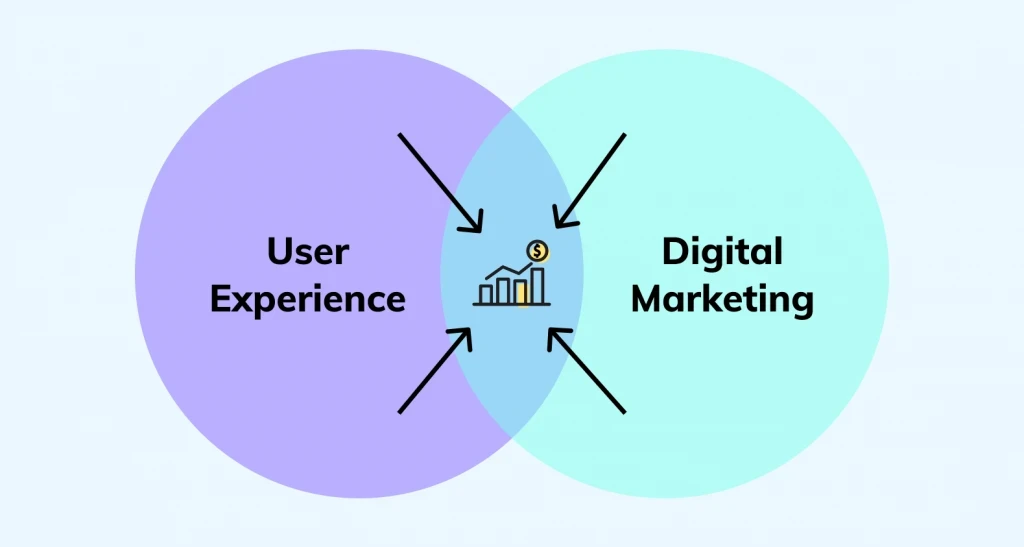
How strategy, psychology, and data still guide my design process.
The overlap - What carried over from marketing to UX
Hypothesis-Driven workflows: growth hacking meets lean UX
During my Growth Hacking Traineeship at The Talent Institute (TTI), I learned to build marketing experiments from hypotheses. Using a full-funnel approach, we launched MVPs (Minimum Viable Product) and ran real-market tests to validate ideas. This mindset, inspired by The Lean Startup, taught me to work fast, stay lean, and always measure impact.
When I transitioned to UX, I was surprised (in a good way) to find the same method at its core. Lean UX also starts with assumptions, which we validate through user research and testing. While marketing experiments focus on growing awareness and adoption, UX experiments focus on improving the product experience. But both aim to understand and serve the user better.
Key takeaway: Both disciplines start with a hypothesis. One tests for growth. The other tests for usability. Together, they make better products.
Testing & Validation: A/B testing in both worlds
A/B testing is a key tool in both digital marketing and UX design.
In marketing, I used A/B tests to compare headlines, visuals, and targeting, often across channels like Google Ads and LinkedIn.
In UX, we test design elements: layouts, CTAs, copy, flows, even microcopy and tone of voice.
At Rainbow Solutions, I launched a new product using a performance marketing funnel. I ran dozens of A/B tests to find the right message for the right audience. Every tweak — from image to button colour — taught me how people respond.
Now, as a UX designer, I do the same — but with prototypes instead of ads. I test button placement, screen flows, and interaction logic to improve usability and guide behaviour.
Key takeaway: Whether it’s an ad or a prototype, A/B testing helps validate assumptions and drive continuous improvement.
Journey Thinking: Funnel vs. Flow
In marketing, we design funnels: a series of steps that lead users from awareness to conversion. In UX, we design user journeys: paths users take through a product to complete a task.
Different words. Same idea. Both require empathy, clarity, and intentional structure.
This overlap was what drew me to UX in the first place. I’ve always enjoyed mapping how people think and move through systems. Now, I use that mindset to create digital experiences that not only convert, but feel seamless.
Key takeaway: both marketers and designers guide users. The difference is in how - and why.
Urban Sports Club - work example
At Urban Sports Club, I worked as a Performance Marketing Manager, responsible for all paid advertising in the Dutch market, USC’s second largest. My role was focused on driving campaign performance through constant testing, data analysis, and optimisation. Key metrics like CPA, PPC, and conversion rate guided our daily decisions.
But performance marketing goes beyond just traffic and numbers. It’s deeply connected to UX.
Every campaign ended on a landing page, and that page played a critical role in converting users. That’s where the overlap with UX became clear. In order to run effective campaigns, I had to work with:
Information Architecture – Structuring content so users could easily find what they needed.
UX Writing – Making sure the tone, language, and CTAs were aligned with the user’s expectations.
UI Design – Collaborating on button placement, visual hierarchy, and overall page layout.
UX Design – Ensuring smooth user flows that aligned with business goals.
In performance marketing, you don’t just bring users in, you shape how they interact with the product. That means understanding the entire journey: what draws people in, what keeps them engaged, and what drives them to act.
Urban Sports Club gave me hands-on experience shaping digital experiences through data, testing, and teamwork. The bootcamp added the missing piece, design methodology. Together, these experiences give me a unique edge: I can approach product challenges with both a data-driven mindset and a user-centred design lens. It’s this combination that enables me to help build smarter, more effective digital products.
Applying UX tools and frameworks
Learning UX wasn’t just about mindset, it was hands-on. Through my bootcamp and personal projects, I’ve had the chance to apply several foundational UX methods that now guide my design decisions day-to-day.
User Research: I’ve conducted user interviews, usability tests, and surveys to gather deep insights into user behaviour.
Synthesis Techniques: Tools like affinity mapping and user journey mapping helped me organise findings and spot opportunity areas.
Design Frameworks: I regularly use the Double Diamond and Design Thinking to structure my process from discovery to delivery.
Evaluation Methods: I’ve run heuristic evaluations and Google Analytics to connect qualitative insights with behavioural data.
Design Tools: I work in Figma, and collaborate using FigJam and Notion.
What this means now
My background in performance marketing taught me to work with data every day, tracking what works, what doesn’t, and why. This gave me a natural instinct for testing, iterating, and improving. Now, as a designer, I use that same data-driven mindset to guide decisions and tie design choices directly to business goals.
My unique strength is seeing the full picture: attracting users, guiding them through seamless experiences, and continuously improving both the journey and the results. It’s not just about design or marketing, it’s about making products that work for people and perform for businesses.
What I bring to a product team:
A/B testing instincts from marketing
User-first design thinking from UX
Ability to bridge acquisition and retention
A bias for data-driven decisions
Clear communication with stakeholders </aside>
Want help connecting marketing and UX?
Send me a message and I’ll help you spot where the journey loses people, and what to improve first.
